
LogMyRepair.app
The application itself — the counter and the books behind one login.
The point
The counter and the books, one login.
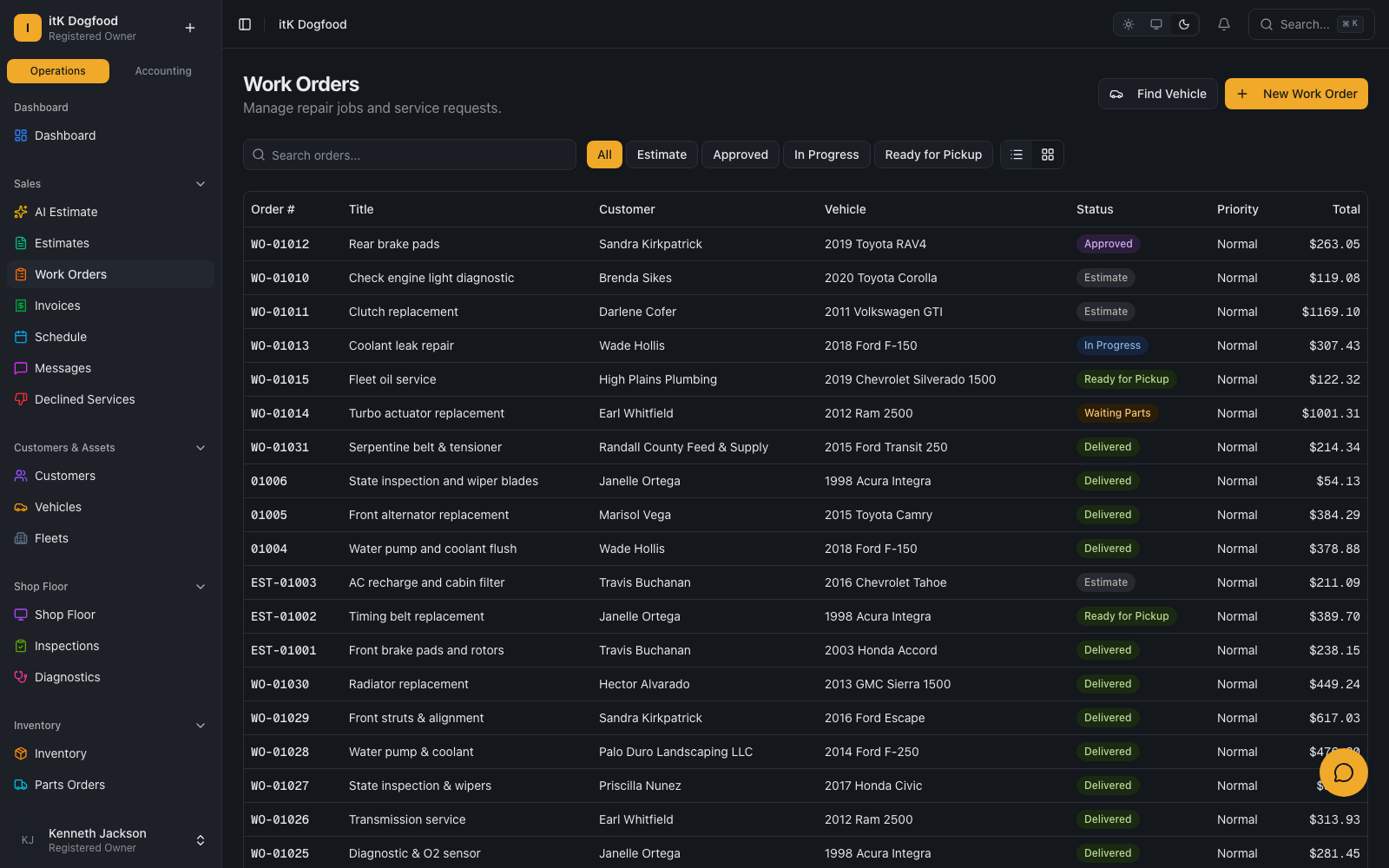
The LogMyRepair case study tells the story of the build. This is the tool itself: the application a shop signs into every morning at logmyrepair.app. What follows is a walk through a job's life the way the app sees it.
Step one
A job is born once.
A customer calls, an estimate goes on the board, and that job gets the only number it will ever have. Estimate becomes work order becomes invoice — same number, same record, growing as it goes. Six months later, anyone at the counter can pull the whole thread in one search.
Step two
Parts, without the re-keying.
Order the parts through supplier punchout, and when the vendor's paper shows up, scan it. The app reads the invoice, finds the PO number, tags it to the work order, and fills the costs into the job. By the time the vehicle is delivered, per-job margin is already computed from what the parts actually cost.
Step three
Money knows where it goes.
Take the payment and the ledger entries post themselves — real double-entry, not an export. Forwarded bank alerts book to the right shop automatically. Reconciliation, sales reports, and sales-tax liability come from the same records the counter created, so the books and the shop floor can never drift apart.
Step four
The customer comes back.
Service reminders generate on schedule and print their own labels. Text messages ride an opt-in consent gate, so the shop stays on the right side of carrier rules. And the customer portal gives every customer their own view — vehicles, estimates, invoices, history — without a phone call.
Where it lives.
The application is logmyrepair.app. Pricing and trials live at logmyrepair.com ↗
This shelf shows the tool — the story of how it was built is next shelf over.