
LogMyRepair
Shop management for independent repair shops — built by running two real shops on it first.
The problem
Paper on the counter, none of it in the books.
Independent shops run on ticket pads, a shoebox of vendor invoices, and a point-of-sale system that stopped getting updates years ago. The accounting happens at tax time, painfully, in someone else's software. Nothing on the counter tells the owner which jobs actually made money — and the tools that promise to fix it are built for chains, priced for chains, and still don't do the books.
What it is
One system: counter to ledger.
LogMyRepair is shop management for independent repair shops with a real accounting spine. Work orders, estimates, and invoicing sit on top of true double-entry books — not a bolted-on export to somebody else's ledger. Write the estimate, run the job, take the payment, and the general ledger is already right. One login, one system, no re-keying.
The tour
The front counter.
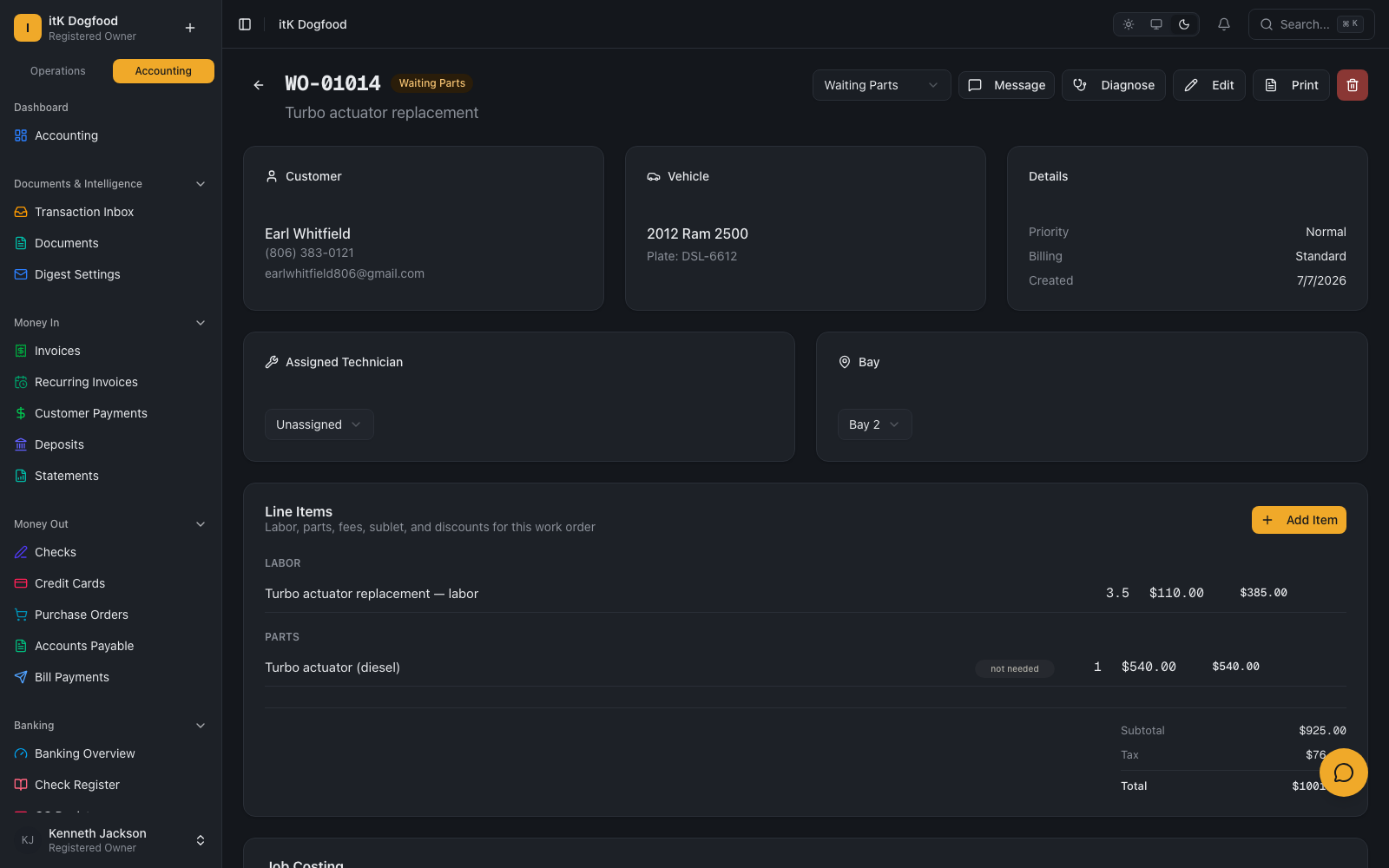
Estimates, work orders, and invoices carry one lifetime number from first quote to paid — a job never gets renamed or renumbered on its way through the shop. The work-order board shows every job by status, from estimate to delivered, with priority and totals at a glance.
The paper reads itself.
Scan any vendor invoice and the app does the clerical work: it reads the printed PO number, tags the paper to its work order, and fills the parts costs into the job. Per-job margin stops being a guess — it's computed from what the parts actually cost, matched line by line.
The books are real books.
Underneath everything sits a genuine double-entry general ledger: banking, journal entries, reconciliation, sales and sales-tax reporting. Forwarded bank alerts book themselves to the right shop. Recurring invoices generate on schedule. The trial balance ties to the penny, because our own shops' books run on it and we need them right.
The customer side.
Customer text messaging with proper opt-in consent handling, service reminders that print their own labels, and a customer portal where a shop's customers see their vehicles, estimates, invoices, and history — no phone tag.
The proof
Born in a working shop.
LogMyRepair wasn't designed in a conference room. A real independent shop — Craig's Automotive in Amarillo — migrated twenty years of history into it and runs its counter on it every working day. Our own books run through it too: the software's hardest QA suite is the fact that we have to reconcile against real bank statements every month.
LogMyRepair is a product.
Pricing and trials live at logmyrepair.com ↗
This shelf is the showcase — the store next door does the selling. Want to see the application itself? The app tour is next shelf over.